LNP leak check
Compare intact lipid nanoparticle (LNP) samples with opened samples to see how much messenger RNA (mRNA) escaped early.
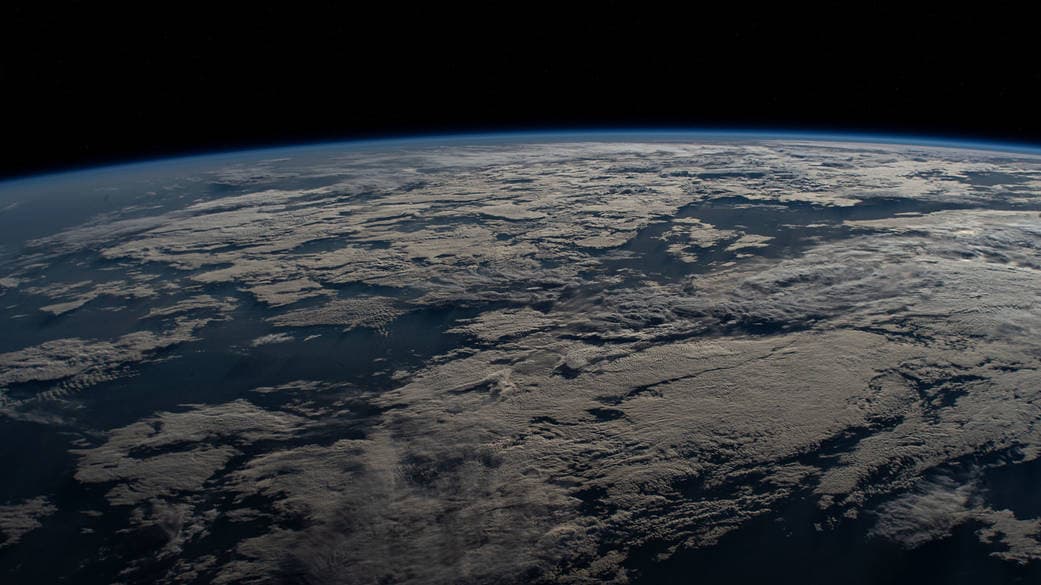
Capsule Space Labs is building toward a testing platform for messenger RNA (mRNA) medicines wrapped in lipid nanoparticles (LNPs): did the package stay sealed, did the medicine leak, and could it still work after the trip?






A small doctrine
Medicine is mission infrastructure.
A crew medical kit cannot depend on a supply chain that is millions of miles away.
The next generation of medicine must be tested in the environments where it will be trusted.
We are starting with messenger RNA (mRNA) medicines because the lipid nanoparticle (LNP) package is as important as the medicine itself.
The goal is not to make space medicine look futuristic. The goal is to make it measurable.
Long-duration crews will need modern medicines that can sit in storage, ride through launch, and still work when there is no hospital backup. Our first question is simple: does weightlessness make lipid nanoparticles (LNPs) leak their messenger RNA (mRNA) cargo before they are supposed to?
White center: lipid nanoparticle (LNP) package.
Orange strand: messenger RNA (mRNA) cargo.
Green points: mRNA detected outside the LNP.
Not a drug company first
The first product is a clear answer: did the lipid nanoparticle (LNP) stay sealed, did messenger RNA (mRNA) leak, did the RNA get damaged, and could it still do its job after flight-like stress?
Compare intact lipid nanoparticle (LNP) samples with opened samples to see how much messenger RNA (mRNA) escaped early.
Use a glow-producing reporter to see whether accessible messenger RNA (mRNA) can still make protein.
Use reverse-transcription PCR (RT-PCR) to separate RNA damage from LNP package failure.
Compare ISS-stored samples with matching Earth controls across time, temperature, and stress.
Flight-qualified medicine
Capsule Space Labs focuses on the fragile parts of modern therapeutics: the RNA instruction, the lipid nanoparticle package, and the conditions that can quietly weaken both before a crew ever needs the dose.
Messenger RNA (mRNA) medicines whose function depends on RNA staying readable after storage, launch, and flight.
Lipid nanoparticles (LNPs) that protect the medicine until the dose reaches the right biological target.
Signals that separate damaged RNA from a package that simply leaked before it should have.
Storage conditions that can change how long advanced medicines stay usable away from Earth.
The combined stress of vibration, time, radiation exposure, and microgravity on packaged medicines.
Built for mission partners
Pharma teams qualifying advanced medicines for off-world use.
Biotech groups building RNA, gene therapy, or nanoparticle platforms.
NASA and commercial station partners planning biological payloads.
Defense medicine groups preparing treatments for isolated environments.
Mission planners who need medical systems to be as reliable as hardware.
From Earth to readout
Measure intact and opened mRNA-LNP samples before flight so there is a clean starting point.
Send matched samples through the same storage window, with Earth controls held in parallel.
Let the sample experience true microgravity while protecting the readout plan from crew complexity.
Use fluorescence and end-point reverse-transcription PCR (RT-PCR) to separate leak from RNA damage.
Report how much medicine stayed packaged and whether the flight sample drifted from the Earth control.
Why space health
A medicine that works on Earth is not automatically mission-ready. In space, failure can be quiet: a package leaks, an RNA strand degrades, or a dose loses strength while sitting in storage.
Core experiment
BioBits cell-free expression shows whether accessible mRNA can still produce a readable glow signal.
Intact and opened LNP samples show what leaked early versus what was present in total.
End-point RT-PCR helps explain whether a weak signal means RNA damage or LNP package failure.
Updates from the lab
Capsule Space Labs named one of five finalist teams in the 2026 Genes in Space national competition: top 5 out of 980 submissions from 369 schools nationwide.
Project: Encapsulation efficiency and structural stability of lipid nanoparticles in microgravity.
Read the Genes in Space announcementStep-through 3D views of the Flagship Experiment, from LNP cutaway and tube assay to ISS flight and fluorescence readout.
Enter Flight LabCapsule Space Labs begins from a student-led space biology proposal and grows into a focused health-tech thesis: medicines need flight qualification, not just shelf-life labels.
Harvard '30
Lambert HS '27
Collaborate
Reach out for research collaborations, flight payload discussions, or early partner interest in testing medicine stability beyond Earth.
Contact the LabThe purpose